|
|
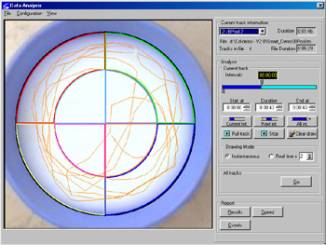
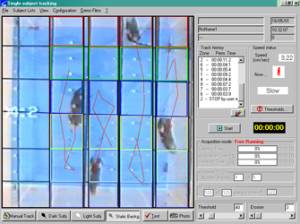
Videotrack System The
SMART program superimpose the image picked up by a CCD Color Infrared camera
with the detecting zone designed by the Researcher and enables Animal
Behavior Recording in a wide range of Investigation Experiments such as: Open Field, Maze, T Maze, Swimming pool,
etc. Each animal cage can be split in up to 32 different areas of analyses
and the software can calculate rest, small and large movements and
corresponding time in absolute values and percentage. The Researcher can plan
its own experiment and analyses results in a wide range of options easily
setting by a friendly driven menu software. |
|
SMART is a powerful but user-friendly video based
system, that allows, using digital imaging, a precise analysis of motor behaviour
in experimental animals.
SMART
offers not only spatial position information but also automatic detection in
a range of specific behaviors. Able to work either with a single animal in a single
arena, with several animals in separate arenas or with several animals in the
same arena (suitable for social behaviour studies). It is simple to use and configure the system, to define zones,
arenas and associations, to set-up and perform data acquisition, and the
versatility, variety and accuracy of the output calculations. TRACKING allows detecting and following
the trajectory of : a single subject (SMART-BS), up to 16 subjects
in separate arenas (SMART-MA), up to 8 subjects in the same arena
(SMART-SS), up to 8 subjects per arena in up to 16 separate arenas
(SMART-SS-MA). Smart's Zone Editor
makes it easy to draw Arenas and Zones , as well as to define Zone
Associations and Zone Settings. |
Acquisition timings can easily be defined as 'free running', 'pre-set
time' or 'programmed time'. When
working with multiple arenas (MA), the tracking can be started/stopped in
each one independently, or all at the same time. SMART
BS – Basic system single animal SMART
MA – Extension up to 16 animals GRBOARD
– Digital superimpose Grabber-board SMART
SS – Social Behavior software |
|
COST EFFECTIVE SMART SYSTEM NOW AVAILABLE Smart JUNIOR Smart Junior platform (needs Experiment
modules) SJWM Water maze Experimental
Module SJPM Plus-maze Experimental
Module SJOF Open-field Experimental
Module SJTLS Telemetric Switch |
|
|
SMART Junior Low Cost Video-tracking System Low-cost video-tracking system specially
indicated for laboratories with very precise interests and succinct
meaningful reports. It is also a perfect alternative for emergent markets.
|
|

|
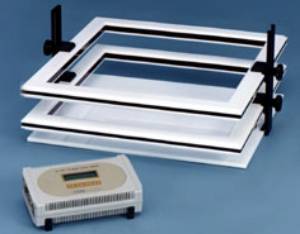
Especially designed for Open Field
Experiments, it detects animal movements
from 2 levels of 4 side Infrared Sensors placed all around the square cage
(45 x 45 cm.). It enables to detect both horizontal and
vertical activity. Up to 32 areas can be drawn for any animal
arena. Tracking file can be analyzed with different
ZONE configuration. Hole Board option
can be added. Sophisticated software which enables to
record: Number of fast and slow movements counts - Time moving fast and slow - Resting time Code LE 8811 One
complete unit |
Code LE 8814 Transparent
Arena 45 x 45 cm. Code Actitrack : Software for PC up to 16 cages |
|
|
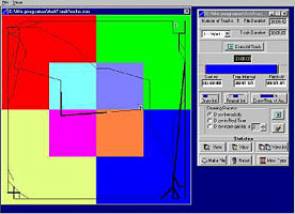
Actitrack software Up to 32 frames LE 8811 (16 complete cages)
can be controlled by ACTITRACK software. Different alternatives of programming Data
Acquisition and Analyses. Experiment configuration can be personalized. Example of Data results: - Total traveled distance - Max. and min. speed - Time moving fast, slow and resting - Number and mean length of movement episodes - Number and mean duration of rearing. - Number of Clockwise and counter-Clockwise
turns |
|
|
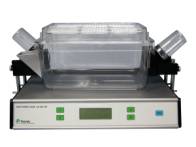
PHECOMP for compulsive food and drink intake and activity The PHECOMP system
is an equipment for measuring food/liquid consumption and correlated motor
activity in studies designed to assess compulsive behaviors in rodents. The PHECOMP system uses the weight
transducer technology for measuring food and drink consumption, thus allowing
a continuous signal and then a precise analysis of the animal meal pattern by
the software. Animal activity and rearing are recorded simultaneously by the
means of 2 dimensional IR frames. The signals from each weight transducer
unit and the IR frame are amplified, digitalized and send to the PHECOMP
software for analysis. The modular design of the PHECOMP system allows a wide
range of experimental procedures. |
|
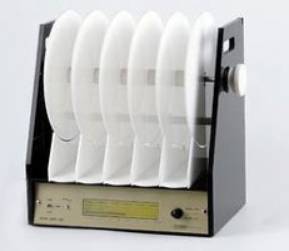
Rota-Rod
provides an easy way to test the motor function in rodents. Drugs administration,
central nervous system damage or disease effects on motor coordination or fatigue
can be assessed by measuring the time during which the animal remains walking
in a rotation drum. A removable upper separator is included in the LE 8300
and LE 8500, avoiding interference between animals running in adjacent
lanes. Entirely controlled by a
microprocessor: more precise timing control and more accurate speed
regulation. Speed and acceleration electronically controlled. A built-in RS 232 port allows the transfer
of data to a PC. Includes
communication program SEDACOM Individual
time counters (min:secs). Each
counter runs from the beginning of the test until the animal falls from the
drum to the lane. Electronic change of speed from 4 - 40 rpm (RUN Mode).
Rotation at constant speed or at a fixed acceleration rate from 4 to 40 rpm
in a selected time: 30 secs, 1, 2, 5 or 10 min (ACC Mode). Data are stored in
memory as a table lanes / trials |
LE
8200 Rota
Rod for 5 mice with Software LE 8300 Rota
Rod for 4 rats with Software LE 8500 Rota Rod for 4 rats
or 4 mice with Software (only changing the central drum) |
|
|
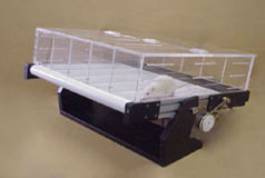
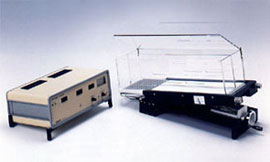
The
Treadmills are rolling belts with an adjustable speed and slope, enabling easy
and accurate testing of fatigue in rodents. The rolling belt provides the
animal with enough room to correct co-ordination errors before failure, thus
giving a better measure of fatigue instead of impairment of motor
co-ordination. A
grid at the end of the belt administers a shock that forces the animal to run
in order to avoid it. The values that can be quantified in a trial are belt
speed and slope, distance traveled in meters, shock time, and shock intensity.
Belt velocity also can be controlled by software. The apparatus can
optionally be provided with an air isolated enclosure for metabolism studies. LE 8700
One lane Treadmill LE 8706
Double lane Treadmill LE 8710
Five lane Treadmill LE 870CO
Metabolism option TC 876 Control
Software up to 4 Treadmills |
|
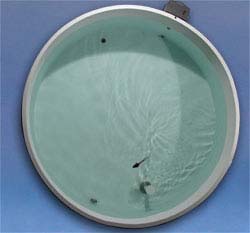
Provides
the ideal environment to carry out the Swimming Test described by Morris
(Morris .G.M., Learning and Motivation, 12:239, 1981). Different
sizes available complete of control unit. The
island can be located anywhere in the pool. with the pool are supplied two
platforms, 80 and 110 mm diameter. The pool are manufactured of
Polypropylene. It’s located in a support with 4 wheels for better
displacement. In
the Control Box are located: - The Heater - The Water Circulation Pump The
Level Controller - Electro valve for Pool filling. Code LE 820-90
Pool diameter 90 cm. Eight 50 cm. Code
LE 820-120 Pool
diameter 120 cm. Eight 60 cm. Code LE 820-140
Pool diameter 140 cm. Eight 60 cm. |
Code
LE 820-170 Pool diameter 170 cm. Eight 60 cm. Code LE 820-200 Pool diameter 200 cm. Eight 60 cm. |
|
|
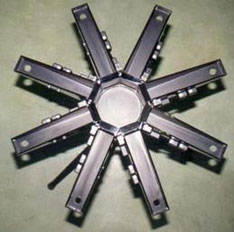
The
assessment of animal memory using different types of mazes has been Longley
used in neurosciences. Several models have been proposed recently, mainly
trying to evaluate accuracy of choice between the alternatives presented in
the same day of the session, instead of looking for the accumulated learning
through successive days of training. The "Eight Arms Radial Maze",
proposed by D.S. Olton & R.J. Samuelson (J.Exper. Psychol: Anim. Behav.
Procs. 2:97, 1976) is one of the most extensively used in behavioral
laboratories all over the world, mainly due to the flexibility of its
structure, allowing the testing of spatial memory but also non-spatial cue
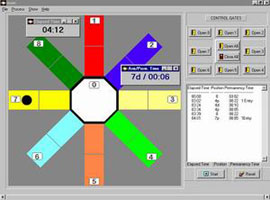
memory linked with motivational elements. The software allows for the full
control of the arm's doors either manually (by means of a buttons panel at
the computer screen) or automatically, when a trained subject is being
tested. The position of the experimental subject is permanently verified and
presented in the computer screen. Plus
Elevated T Maze models available. Code
LE 760 Radial
8 arm maze for Rats Code
LE 762 Radial
8 arm maze for Mice Code
LE 766 Radial
8 arm maze for Rats + software Code
LE 768 Radial
8 arm maze for Mice + software Code
Le 840 Plus
Elevated T maze for Rats Code
Le 842 Plus
Elevated T maze for Mice Code
Le 846
Plus Elevated T maze for Rats + software Code
Le 848
Plus Elevated T maze for Mice + software |
|
New Behavior Modular System by Panlab The same Cage Base with position sensors and grid floor shocker can be used for almost any kind of
experiment required; by just replacing the walls, for instance, a Shuttle box
can be transformed into a Passive Avoidance or a Tremor cage and more and
more ……………….. |
|
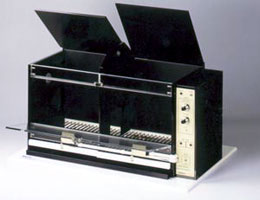
The
Shuttle Boxes LE 916 (for Rats) and LE 918 (for Mice) provide the ideal
environment for carrying out the Conditioned Reflex Studies. Two compartment cage with Sound and Light
Stimulus and two independent shocker grid. Shocker
Included, software available. Code
LE 916 Rat
Cage Code LE 918 Mouse cage Code
LE 2706 Programming
Unit and Shocker Code
LE 60-400 4 cage system Interface + software Shuttle 8 Code
LE 60-800 8 cage system Interface + software Shuttle 8 Code
LE 26 ISOLATION SOUND PROOF CUBICLE |
|
|
|
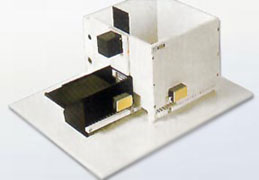
This
unit allows for the study of a passive avoidance reflex, using aversive
stimulation to inhibit the innate tendency of rodents to avoid large open and
bright spaces and hide small ones. Two different sized and coloured
compartments separated by a sliding guillotine door form the experimental
box. A separate control unit (not shown) gives full control over the experimental
parameters and record the behaviour of the experimental subject along the
trial. Code
LE 870 Rat
Cage Code
LE 872 Mouse and Gerbil Cage Code LE 1516 Control unit with software |
|
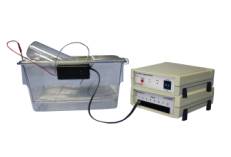
Vogel's
anxiety test experimental set up Many
different animal models have been developed for testing the effects of
anti-anxiety drugs on behavior. The most frequently used behavioral action is
the anxiolytic ability to increase response rates suppressed by delivery of response–dependant
punishment. One of the most popular versions of this technical approach
is that developed by R.A. Vogel in 1971 (Psychopharm. (Berl.), 21:1-7). In
this model, licking of drinking tube suppression in water–deprived rats, is
reestablished by anxiolytic pretreatment. As the model can be used with naive
rats in one test session, it has become a standard for fast screening of anxiolytic
activity of drugs. We havve developed a fully automated set up
fulfilling all the control needs of the Vogel's Test, and allowing test
performance in a single and easy to use experimental unit. The set–up is formed by the animal
cage, and a modular control unit that include a shock generator. |
Code LE862 Box for Vogel test Code LINKBOX01 Interface for up to 8 Vogel test boxes. RS
232 Output Code LE10025 Vogel test Shock Generator (without
Scrambler) |
|
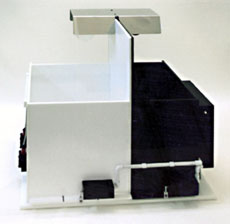
Numerous
behavioural paradigms using several conflict procedures, social interaction
or exploration of novel environments have been proposed as animal models of
anxiety. B. Costall et al have described (Pharmacol. Biochem. Behav. 32(3):
777-785, 1989) a new model based on the aversive properties of the open field
and in which anxiolytic drug-induced ease of exploratory activity is compared
between an illuminated compartment and a dark one. This model permits
simple and quick evaluation of the anxious behaviour and its modification by
pharmacological agents. Panlab s.l. has developed a complete system for the
carrying out of this experiment, including both boxes for the experimental
subjects and the appropriate control instrumentation. Code LE 812 Cage for Rats Code LE 810 Cage for Mice Code LE 816 Automati Cage Rat Code LE818 Automatic Ca. Mouse Code LE 3816
Control Unit for automatic models with photocells |
|
|
|
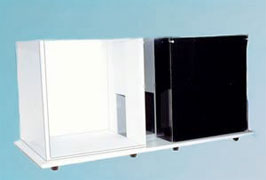
The
experimental box is composed of three Perspex compartments, two 300 x 300 mm
compartments, one white and the other black, joined through 80 x 150 mm gates
(with manually operated sliding doors) to an intermediate 100 x 80 mm central
grey compartment. All the walls, matt finished, are 340 mm high. Soft and
rough floors are supplied for the black & white compartments. Frontal
panels are transparent but opaque extractable covers are already included. Code
LE 890 Basic Place Preference Test Code
LE 892 Automatic Place Preference Test + software |
|
|
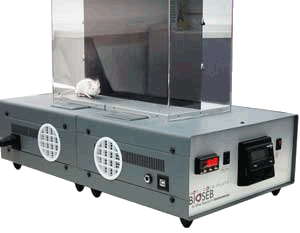
2 Temperatures Choice Test As advised by A. MOQRICH, and
published in Moqrich et al (Science 2005, 307: 1468-72), this test allows researcher
to work on unrestrained animals let free to choose their preferred position
between 2 compartments set at different temperatures. This behavioural assay
will allow monitoring temperature preferences, nociceptive thresholds and
state in the role of a given gene or a compound on these thresholds. This
test is investigator-independent, unlike the cold and/or hot plate test:
using the traditional plates, an operator can measure the reaction time of an
animal exposed to a certain temperature. The "two Temperatures Choice
Test" will return a response without any action from the operator, and
the obtained value is a temperature or a temperature range. 2 animals can be
observed simultaneously and independently, making the system remarkably
attracting. |
|
The position of each animal can be
obtained very easily with the automatic detection software. Results can be
transferred directly as an Excel file or as a txt format. Measured
parameters: for each animal, you can retrieve your data as the time spent in each
temperature zone, the time of each zone trespassing and the temperature of
each zone. As advised by A. MOQRICH, and published in Moqrich et al (Science
2005, 307: 1468-72), this test allows researcher to work on unrestrained
animals let free to choose their preferred position between 2 compartments
set at different temperatures. This behavioural assay will allow monitoring
temperature preferences, nociceptive thresholds and state in the role of a
given gene or a compound on these thresholds. This test is
investigator-independent, unlike the cold and/or hot plate test: using the
traditional plates, an operator can measure the reaction time of an animal
exposed to a certain temperature. The "two Temperatures Choice
Test" will return a response without any action from the operator, and
the obtained value is a temperature or a temperature range. 2 animals can be
observed simultaneously and independently, making the system remarkably
attracting. The position of each animal can be obtained very easily with the
automatic detection software. Results can be transferred directly as an Excel
file or as a txt format. Measured parameters: for each animal, you can
retrieve your data as the time spent in each temperature zone, the time of
each zone trespassing and the temperature of each zone. The System can also be used as HOT/COLD PLATE Test |
|
|
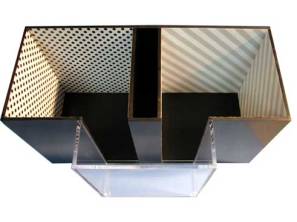
SPATIAL PLACE PREFERENCE BOX The
Panlab spatial place preference box is an experimental chamber developed with
the aim to optimise place preference and aversion studies in small laboratory
animals, especially mice. The design of the box is fruit of a close
collaboration with eminent Professor Dr. Rafael Maldonado and Dr. Olga
Valverde from the Laboratory of Neuropharmacology in Barcelona (Spain). The
apparatus consists in a box with two equally sized compartments interconnected
by a rectangular corridor. Originally, the compartments are differentiated by
the motifs painted on the walls (dots or stripes) and the colour (different
shade of grey tones, light or dark) and texture (smooth or rough) of the
floor. The innovation brought by the Panlab box is the possibility to combine
a new additional spatial dimension to allow the animal differentiate the
different compartments in a more discriminative manner. Transparent walls are
also used to minimize the time the animal spent in the corridor. The
introduction of these new discriminative elements allows: - optimising the
results obtained in the place preference and aversion paradigms (low
variability in the response, reduced number of animals per group...) |
- organizing the discriminative elements in a wide variety of
configurations for studies evaluating spatial or contextual memory. - using the
elements as discriminative cues associated with drug exposure in diverse
other experimental designs. The Panlab spatial place preference box can be
associated with the SMART video-tracking system for detection and analysis of
animal position throughout the test. |
|
|
|
Unit for recording rotation behavior in rats. It consists of a
bi-directional rotation sensor that provides a double (right and left turns)
output with adjustable regulation of pulses/turns, an animal movement
transmission harness fastened with Velcro, the stand and the cubicle. An external
counter (such as the LE 3806 Data Logger) for data storage is necessary. Code LE902
Rotation Behaviour System. Code LE902CC
Double counter (left & right turns) |
|
Code LE3806
MULTICOUNTER. Programmable counter 30 inputs Code LE902SR
Left & Right Rotation Sensor, adjustable
resolut. Code LE902AS Ring-type harness for rats |
Code LE902ASE
Ring-type harness for mice Code LE902RP Cylindrical container Code LE902BT
Oval
container |
|
|
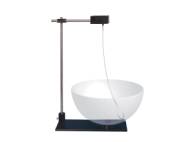
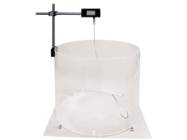
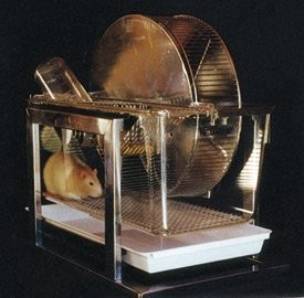
Running
Wheel cages provides a simple, cheap and reliable way to record animal
activity. A digital Liquid Crystal Display provides number of turns or ¼ of
turns. The
output of the rotation sensor can be connected to a DATA LOGGER (model 2b
LEDT) for PC interfacing. Up
to 48 cages can be interfaced simultaneously. Code RWMC1 Activity Running Wheel with LCD counter
for MICE (records number of turns) Code RWMC4 Activity Running Wheel with LCD counter
for MICE (records number of ¼ of turns) Code
RWRC1
Activity Running Wheel with LCD counter for RATS (records number of turns) Code
RWRC4
Activity Running Wheel with LCD counter for RATS (records number of ¼ of turns) |
|
|
SELF
ADMINISTRATION
for operant
conditioning
Memory - Reward
& Addiction Our
Modular Operant Chamber is an entirely modular experimental enclosure
designed to conduct operant conditioning procedures (e.g. food reinforcement,
DMTS, conflict tests, self-administration…). The operant chamber is made in
an entirely modular structure which allows complete disassembling or
rearrangement to build a new space of different dimensions/components or to
enable storage in the minimum space. It can be easily transformed from rat
chamber to mice chamber (or vice versa) with a reduced cost. A frontal door
offers a total accessibility inside the chamber. Walls and cover can be of
different material or colour, since they are totally removable. Each chamber
is associated with a Link Box which provides power to up to 8 (expandable to
16) Operant Modules (levers, lights, sound, dispensers, electrical shock...)
conferring to the chambers a full autonomy. Special accessories are provided
for self-administration procedures. Only one cable connects the Link Box to
the LE85XCT Programmer or PC (PackWin Software), this last for advanced
protocol configuration and running. The Cages can be equipped with a Weigh
Transducer in order to record activity or freezing. -
Entirely modular system -
Easily transformed from rat to mice chamber -
Reduced number of cables -
Possibility of customization -
Up to 8 stations can be connected at once to
PC through a single cable |
|


|
|
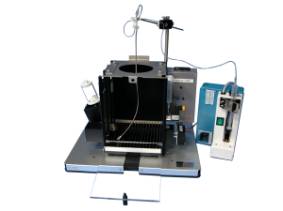
Self Cage: Cage for Self - Stimulation in lab
animals The SELF CAGE is a complete and compact unit designed for performing
basic Operant Behaviour Experiments. In fact, it is a Skinner Box, but
instead of including the classical pellet or liquid dispenser, now the
reinforcer is an electrical stimulus or the administration of a drug. Depending on the nature of the
reinforcement we can have two different types of boxes: 1 - The ones where
the press of the lever provokes an electrical stimulus. 2 - The ones where
the press of the lever provokes the administration of a determinated dose of
a drug. LE 855 Rat cage (shock) LE 856
Rat cage (Drug) LE 857 Mouse cage (shock) LE 858 Mouse cage (Drug) |
|
Skinner Box
|
Modular
Skinner Box
A modular cage that allows the placement by simply
sliding of up 12 plates holding the diverse actuators, enabling the Box to be
configured according to the required experimental design.
All of these elements are electrically connected
by means of male-female standard banana-type connectors (totally reliable) to
their Power Box, so that and with just one cable, they can be connected to
the Programming Systems.
LE 830 Operating
Skinner Box (Cage only)
LE 830C Basic Cage w/Pellet dispenser, lever & stimuli
light
Sknner Pack Computerised System for operant behaviour experiments
(up 8 cages)
|
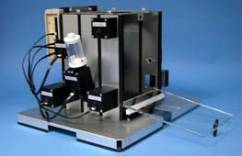
Didactic Skinner Box
Unit
A compact experimental cage fitted with a reinforcement (drops
or pellets dispenser), lever, light stimuli and a power supply for autonomous
operation. This Programmer allows the
Skinner boxes to be programmed to carry out the basic schedules of the
operant conditioning. It is connected to the cages by only two cables: one
for control signals, the other for a shock.
LE
850 W Cage set with Liquid dispenser
LE
852 W Cage set with Pellet dispenser
LE
85 XCT Programmer
with Shocker |
|

The nine-hole box is commonly used to evaluate attention
performance using a visual discrimination task in laboratory animals. The
holes not used in the experiment may be blocked up using a metal insert. The
nine-hole box is associated with the potent and versatile PackWin software in
order to control the experiment and obtain relevant data such as correct
responses, incorrect responses, omissions, premature responses, perseverant
responses, time out responses, total receptacle head entries, etc. Different experimental
paradigms can be conducted using the nine-hole box. As an example, in the
5-choice serial reaction time task, short-lasting stimuli are given in
pseudo-randomised order in one of the holes of the cage (commonly, hole 1, 3,
5, 7 or 9). If the animal nose-pokes into the correct hole, a reinforcement
(pellet) is given. If the animal nose-pokes into an incorrect hole, a
time-out period (no light) is given and next trial begins. Code LE 507 Mice 5-9 Holes Chamber with RS 232 Output
Code LE509 Rats 5-9 Holes Chamber with RS 232 Ouput Code PACKWIN Software for operant behavior experiments (up 8
cages) |
|
|
Code
LE118 Stimuli Interface Unit (1 chamber)
Code
LE1188 Stimuli Interface Unit (up to 8 chambers)
Code
STARTLE Software to control up to 8 stations for
startle reflex studies
Code
FREEZING Software to control up to 8 stations for
fear conditioning studies
Code
LE100-26 Shock generator with scrambler. 0-2 mA output
Code
LE119 Air puff Unit (STARTLE)
Code
LE115 Contextual kit for Fear Conditioning test
(FREEZING)
Code
FREEZINGGLP Freezing
Software module in accordance with GLP
|
Startle Reflex & Fear Conditioning
1 equipment: 2 possibilities
The StartFear Combined system is a polyvalent system for
conducting both fear conditioning and startle reflex experiments in one same
enclosure, regardless the animal is a rat or a mouse (from 15grs to 500 grs.).
Basically, the StartFear system allows recording and analysis of the signal
generated by the animal movement through a high sensitivity Weight Transducer
system. The analogical signal is transmitted to the FREEZING and STARTLE
software modules through the load cell unit for recording purposes and
posterior analysis in terms of activity/immobility (FREEZING) or startle response
characterization (STARTLE). An aditional interface associated with
corresponding hardware allows controlling the stimuli (light, sounds, shock,
air puff) from the STARTLE and FREEZING software modules. The StartFear cage
is made with black methacrylate walls and a transparent front door. In fear
conditioning experiment, the walls, cover and floor can be of different
materials or colours. Moreover, a transparent cylinder can be placed into the
experimental chamber in order to modify the contextual spatial perception of
the subject during the test phase.
Code
LE116 FREEZING AND STARTLE Threshold Sensor including
Sound Attenuating Box.
Code
LE117M Mouse Holder for Startle Reflex (animal
weight required)
Code
LE117R Rat Holder for Startle Reflex (animal
weight required)
Code
LE111 Load Cell Amplifier (one for each Chamber)
|
||
|
|
|
|
|
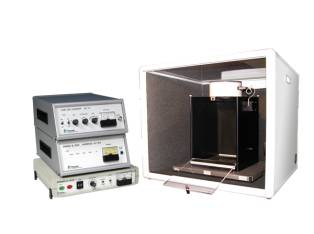
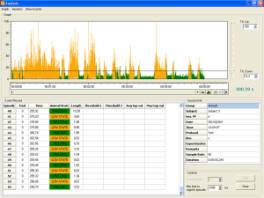
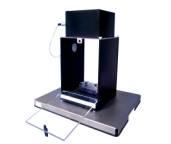
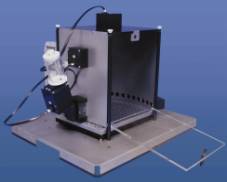
ARON TEST
The Aron test or four plates test is an animal model of
anxiety in which the exploration of the novel surroundings is suppressed by
the delivery of a mild electric foot shock.
Basically, the apparatus consists of a cage floored by four identical
rectangular metal plates (8×11 cm) separated from one another by a gap of 4
mm. The plates are connected to a shocker unit that can generate
electric footshocks. Following habituation period, the animal
is subjected to an electric shock when crossing (transition) from one plate
to another, i.e. two legs on one plate and two legs on another. Boissier et
al. 1968 has described this test first. The number of punished crossings is
generally calculated for a period of 60 s. A substance with anxiolytic
properties induces an increase in the number of punished passages.
Code
LE830 Aron Test
Box
Code LE10026
Shocker with scrambler |
|
|
|
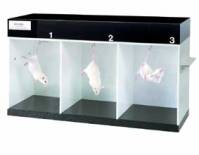
TAIL SUSPENSION
TEST This test allows fast evaluation of drugs
(anti-depressants, sedatives) psycho-tropic
effects. The measuring principle is based on the energy developed by mice
trying to escape from their suspension. During the test, the movements of the
mice are analysed in terms of force, energy and power developed over
time. The System presents a
completely automated test, including the suspension cages (3 mice per cage)
and the software to run, record and analyze the experiments. The software presents the results as
tables and Histograms but also it allows to transfer the results into Excel
for statistical analysis.
Code TST (specify mouse or rat) Available in
different configuration |

|
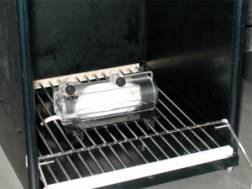
NEW |
Restrainer Adjustable, suitable for
any size
Useful for Pyrogen Test, temperature control, ear investigation and whatever else Code 2BRR
|

|
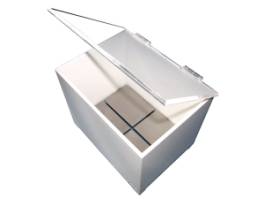
Acoustic
and Light Isolation box very useful for Experiments where environmental
conditions can disturb usual animal Behavior . Code
LE 26
Sound/Light Proof box |
|
|
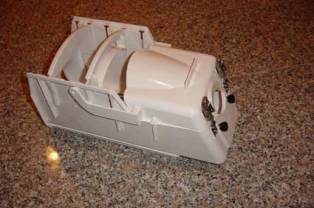
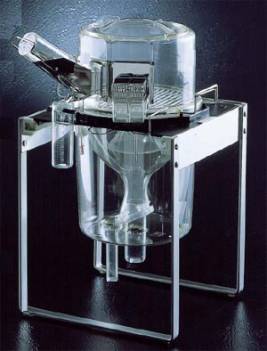
These
meticulously engineered cages feature a unique funnel and cone design that
effectively separates faeces and urine into tubes outside the cage. There's
no urine washover and no potential for urine to enter the faeces tube, so
separation is immediate and complete. The results are untainted and samples
reliable. Code 3700M022 Metabolic cage for mouse or groups of mice
Code 3700M061 Metabolic cage - rats under 150 g Code 3700M071 Metabolic cage - rats from 150 g to 300 g Code 3701M081 Metabolic cage - rats over 300 g |
|
|
|
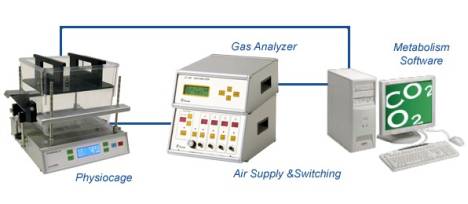
OXYLET SYSTEM for respiratory metabolism, intake and activity in rodents FOOD-DRINK INTAKE METABOLISM LOCOMOTOR ACTIVITY EXPLORATION |
|
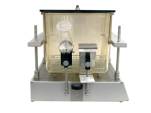
The
Oxylet is a modular system allowing the integration of respiratory metabolism
(O2 consumption /CO2 production), food & drink intake, activity and
rearing measurements in specifically adapted home cages in rodents.
Respiratory metabolism is evaluated by means of indirect calorimetry an optimized
system for studies on laboratory rodents (mice and rats). Food and drink intake and activity are
evaluated using the weight transducer technology especially developed. This
technology allows the continuous assessment of the animal food and drink
consumption as well as spontaneous activity with highest accuracy and
stability. Rearing assessment requires simply an additional InfraRed (IR)
frame connected to the system. The modular design provides easily
expandability for any of the options of the system. The researcher can select
only those components of initial interest… but with the flexibility of adding
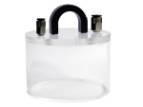
others at a later date. Special Oxylet configurations are available for
performing calorimetry studies with rat neonates or during treadmill
experiments. Rat neonatal chamber available
(see picture at right). Modular
system, different configurations available |
|
|
|
|
|
|
|
|
Parameters Measured -
Oxygen (O2) consumption (METAOXY module) -
Carbon dioxide (CO2) production (METAOXY module) -
Respiratory quotient: O2/CO2 (METAOXY module) -
Energy expenditure (METAOXY module) -
Treadmill data: speed, covered distance, number of shock received,
total duration of shock received (METAOXY module) -
Food & Drink consumption (METAINT module) -
Mean spontaneous activity (METAACT module) -
Number of rearing (METAACT module) -
Analysis by intervals of time -
Time-curve graphical representations |
|
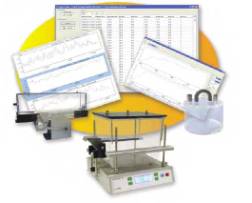
METABOLISM - polyvalent sofware for physiology in rodents FOOD-DRINK
INTAKE AND METABOLISM - LOCOMOTOR ACTIVITY AND EXPLORATION METABOLISM consists in different
modules, activated upon customer request: -
METAOXY -> for O2/CO2 metabolism studies (Including Treadmill based
studies). |
|
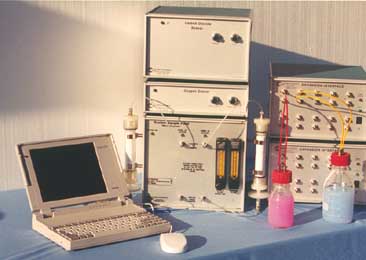
Micro Oxymas O2/CO2/CH4 Respirometer Cell Culture
Respirometer By Columbus This new product
is substantially different from commonly used method of measuring cell and tissue
respiration by an immersed dissolved oxygen probe. While such method may
provide information about oxygen levels within the cell culture, it cannot provide
quantitative measurement of oxygen consumption and CO2 production. New
Columbus Respirometers and Micro-Oximas systems are the unique Instruments
which can go into very high sensitivity and provide a wide range of
parameters. Columbus cell culture Respirometer allows continuous measurement
of cell culture or tissue growth in different atmospheres and temperatures.
Also measurement is not limited to only O2, and CO2, but may also include
other gases. This new development should be of great interest to the growing
number of Scientists who work with cell and tissue cultures, including cancer
Research and Toxicology |
More information: www.colinst.com Or directly: http://www.colinst.com/brief.php?i=45
|
|
|
|
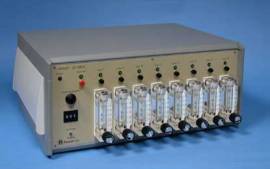
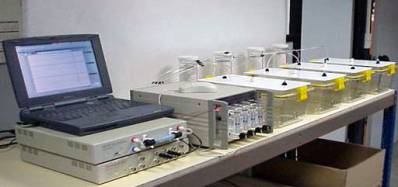
Respiratory
Metabolism by Panlab Oxylet 4 system for the measurement of o2 consumption and co2 production in lab animals The Oxylet 4 (Le
400-4) is an indirect open circuit calorimeter. The system allows the
monitorization of Oxygen Consumption VO2, Carbon Dioxide Production
VCO2, Respiratory Exchange Ratio R.E.R. and Calorimetry.
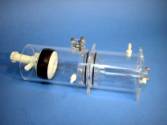
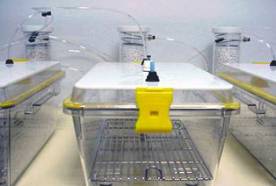
It has been designed to monitor four metabolic chambers simultaneously. Available in
different configuration Plethysmograph experimental
model also available (picture right below) |
|
|
The
system includes: -
Air Supply Unit -
Metabolic Chamber Dessicator Columns -
O2 and CO2 analyser -
Recording and Analysing Unit |
Features: -
CO2 Sensor Range 0-10% -
Drift 0,1% in 8 hours -
O2 Sensor Range 0-100% -
Drift 0,01% in 1 hours |
|
|
|
|
More information
at: www.panlab-sl.com
|
|
|
|
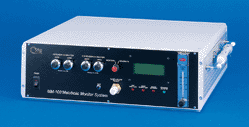
Metabolic
Monitor for O2 and CO2 The
50090 Metabolic Monitor measures oxygen consumption (VO2) and CO2 production
(VCO2). The superior sensitivity of this apparatus makes it possible for the
operator to see substantial changes in gas metabolism readings as a mouse
moves about the cage, sleeps or is disturbed. This system is suitable for
comparing the metabolic rates of various strains of mice, and to detect group
or individual differences in the metabolic response to stressors. Code 50090 O2 and CO2 Monitor |
|
|
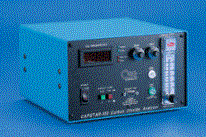
CO2 Monitor The
CO2 content of exhaled air provides a measure of whether an animal on a respirator
is getting adequate tidal volume and breath rate. The percentage of CO2 in
air exhaled into a mask can also be monitored with freely breathing animals
under anesthesia to detect if the level of anesthesia is dangerously deep.
This CO2 monitor is designed for use in the research laboratory. It provides
continuous accurate measurement of CO2 over the range of 0-10% CO2. The rapid
response time and moderate sample flow requirements make this instrument
suitable for use with any size animal, even the small rodents commonly used
in |
|
laboratory research. Halothane and Isoflurane do not affect the signal, making these instruments appropriate for use with any of the gas anesthesia instruments and/or any of the respirators in this catalog. Code 50080 CO2 Monitor |
|
2Biological Instruments
via L. Da Vinci 2C - 21023 Besozzo
VA Italy
tel. +39 0332 773210 Fax +39 0332 970141